

Hobart Handler series MIG welders deliver reliable performance for garage fabricators and small shops, but wire feed problems—intermittent stopping, bird nesting at the drive rolls, inconsistent speed, or complete no-feed—halt projects mid-bead.
These issues cause erratic arcs, poor penetration on thicker steel, excessive spatter, burn-back to the contact tip, and frequent rework that wastes wire, gas, and time.
On models like the Handler 140, 175, 190, and 210, feed failures often stem from mechanical wear, electrical faults, or setup mismatches rather than the wire itself. Diagnosing correctly prevents downtime and extends machine life without unnecessary part replacements.
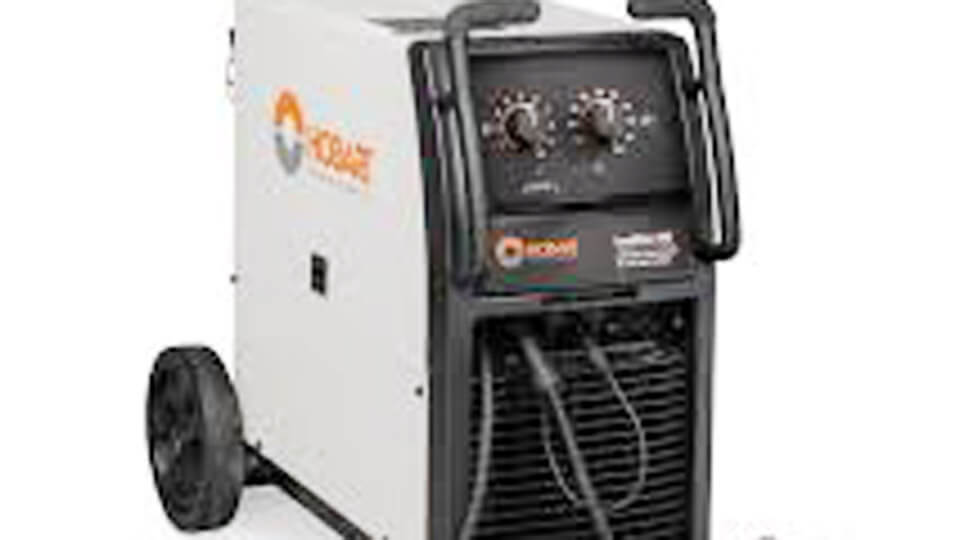
Image by hobartwelders
No Wire Feed When Trigger Pulled
Fan runs and gas solenoid clicks, but the drive motor stays silent. This points to trigger circuit, motor power, or board-level failures common in 115V/230V Handler units.
Trigger Circuit and Gun Lead Tests
Disconnect the gun trigger leads at the machine terminals and short the two spade connectors with a jumper wire. If wire feeds, the issue lies in the gun switch or lead continuity—replace the trigger assembly (common failure after 2-3 years of heavy use). If no feed, check the internal trigger wires for breaks under heat-shrink tubing at the welder end.
Motor and PTC Thermistor Failure
The drive motor receives power through a PTC thermistor (positive temperature coefficient resistor) that protects against overload. When faulty, it opens intermittently or permanently, stopping feed after seconds of use. Test by bypassing the PTC temporarily (short leads) or replace with Hobart PTC1 kit (~$10-15). This fixes many intermittent stops on Handler 135/140/175 models.
Overheat Thermostat Shutdown
Transformer thermostat cuts output (and often feed) during extended high-amperage runs on low-duty-cycle machines. Allow 10-15 minutes cooldown; if feed resumes, reduce continuous welding time or improve ventilation.
Inconsistent or Uncontrollable Wire Speed
Wire surges fast then slows, or runs full speed regardless of dial position. This ruins bead control on thin sheet and causes lack of fusion.
Speed Control Potentiometer Wear
The wire feed speed potentiometer (variable resistor) fails from dust ingress or arcing, causing erratic resistance. Measure resistance across terminals (should vary smoothly 0-10kΩ); replace if jumps or sticks. Common on Handler 140/190 after 500+ hours.
Transistor or Board Fault on Speed Controller
Older Handler models use a TIP142 Darlington transistor to regulate motor voltage. Overheating or age causes it to short or open, locking speed high or low. Desolder and replace the transistor (inexpensive part); resolder with heat sink compound. This repair restores variable control on many 135/140 units.
Voltage Selector Position Error
On multi-voltage models, setting between ranges (e.g., 1-2 instead of full detent) disables proper speed scaling. Confirm dial clicks fully into position.
Bird Nesting at Drive Rolls
Wire bunches into a tangled mass behind the drive assembly, jamming the mechanism. Frequent on flux-cored setups with .030-.035 wire.
Drive Roll Tension Adjustment
Excessive tension crushes wire, creating ridges that increase friction and nesting. Set tension so wire can be stopped by pinching between fingers at the gun tip—no teeth marks on wire. Too loose causes slipping and inconsistent feed.
Liner Condition and Length
Kinked, rusty, or dirty liners restrict flow, forcing wire to buckle at rolls. Pull liner, inspect for debris or wear; blow out with compressed air or replace (Teflon for solid wire, steel for flux core). Ensure liner seats fully against inlet guide—gap >1/16 inch promotes nesting.
Drive Roll Type and Groove Match
Use knurled V-groove for flux core, smooth V or U for solid wire. Mismatched rolls (e.g., smooth on flux core) slip or gouge. For .030 wire in flux core mode, try .035 contact tip to reduce back pressure and nesting.
Spool Hub and Brake Tension
Excessive spool brake creates drag, causing push-back and nesting during arc start. Set light drag—just enough to prevent overrun. For 8-12 lb spools, minimal tension suffices.
| Problem | Likely Cause | Fix | Affected Models |
|---|---|---|---|
| No feed, fan runs | Faulty trigger/gun | Short trigger leads to test; replace switch | Handler 140/175/190 |
| Intermittent stop after seconds | Bad PTC thermistor | Replace PTC1 kit | 135/140/175 |
| Constant full speed | Worn potentiometer or TIP142 transistor | Replace pot or transistor | 135/140 |
| Bird nesting | Over-tight tension or mismatched rolls | Reduce tension; match groove to wire type | All flux-core use |
| Speed surges | Dirty liner or kinked wire path | Clean/replace liner | All models |
Contact Tip and Consumable Interactions
Burn-back to tip or wire stubbing halts feed by increasing resistance.
Tip Size and Condition
Use one size larger tip for flux core (.035 tip on .030 wire) to reduce restriction. Clean or replace tip when bore enlarges or spatter builds—worn tips cause erratic start and feed push-back.
Nozzle and Diffuser Maintenance
Spatter buildup in diffuser restricts gas and increases back pressure. Remove spatter with nozzle reamer; apply anti-spatter dip to prevent accumulation.
Wire Quality and Storage Effects
Rusted or poorly stored wire introduces helix issues or flakes that clog liners.
Rust and Moisture Prevention
Store spools sealed; use desiccant in cabinet. Rusty wire flakes jam liners—discard affected sections or entire spool if severe.
Cast and Helix Compatibility
High cast/helix wire binds in long liners (>10 ft). Switch to low-cast spools or add lube pads only if other fixes fail—excess lube risks porosity.
Preventive Maintenance Schedule
Weekly: Clean drive rolls, check tension, inspect liner for debris.
Monthly: Blow out gun liner, verify potentiometer smoothness, check trigger continuity.
Annually: Test PTC and thermostat function, replace worn consumables proactively.
Decision-making summary: Prioritize mechanical path checks (liner, tension, rolls) before electrical (PTC, transistor, pot) on Hobart Handler models—80% of wire feed problems resolve there without tools. When intermittent electrical faults appear, the PTC thermistor replacement offers the quickest, cheapest return to service.
The pro-level insight: monitor feed motor current draw with a clamp meter during runs; spikes above 4-5A signal binding that precedes nesting or burnout, allowing predictive fixes before failure strands a job.
Why does my Hobart Handler 140 stop feeding wire after a few seconds?
Intermittent feed stop often traces to a failed PTC thermistor overheating and opening. Replace with Hobart PTC1 kit to restore consistent operation.
How do I fix bird nesting on flux core wire in my Hobart MIG welder?
Reduce drive roll tension until wire can be pinched to stop at the tip, use knurled grooves, and install a .035 contact tip for .030-.035 flux core to lower back pressure.
Hobart welder wire feeds full speed no matter the setting—what’s wrong?
Speed control potentiometer wear or failed TIP142 transistor on the board locks voltage high. Test pot resistance; replace transistor if shorted.
What causes inconsistent wire speed on Hobart Handler models?
Dirty or kinked liner creates variable drag; clean or replace liner first. If speed still jumps, check potentiometer for smooth sweep or transistor for heat damage.


