

You pull the trigger on your MIG gun, the fan starts, the gas flows — but the wire just sits there. No movement at all. That exact moment usually means something’s wrong inside the machine, and one common culprit is the drive system.
Troubleshooting a Lincoln Welder Wire Feed Motor Not Working situation can be frustrating, especially when a job is waiting and the machine suddenly refuses to cooperate.
In a busy shop or garage, the wire feed motor is the heart of your MIG welder. If it stops working, the arc can’t start, the wire won’t feed, and the entire setup comes to a halt.
The issue could be something simple like a loose connection or clogged liner — or something deeper like a worn motor or faulty trigger circuit.
I’ve dealt with this problem more than once on Lincoln machines during real welding jobs, and the key is knowing where to check first. A quick, systematic approach can save hours of guesswork and keep you from replacing parts that aren’t actually broken.
Before you assume the worst and start ordering expensive components, let’s walk through the practical checks and fixes that usually bring the wire feed back to life.
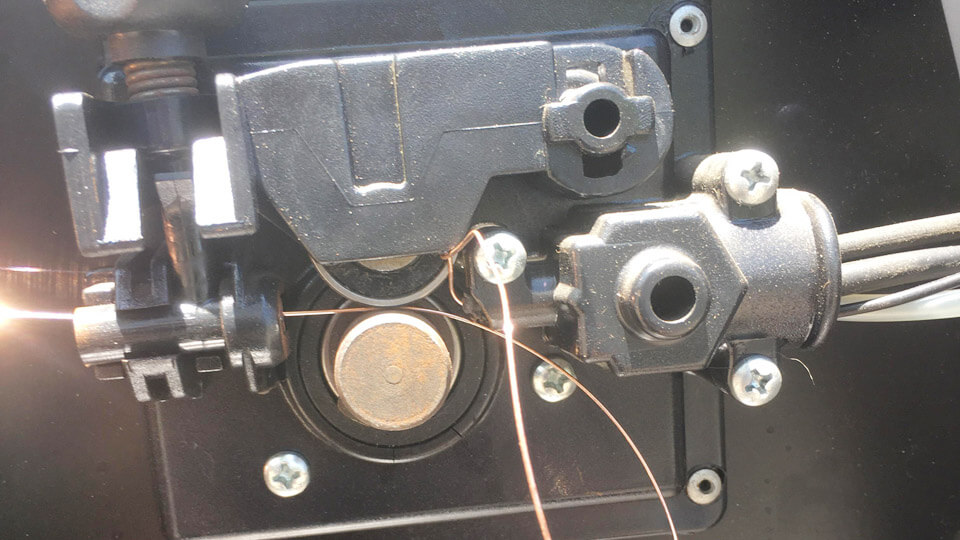
Image by reddit
Safety Precautions Before Starting
Unplug the welder from the wall and wait 5 minutes for capacitors to discharge. Verify zero voltage at the input cord with a multimeter set to AC volts. Wear insulated gloves and eye protection; even low-voltage DC circuits can arc if shorted.
Work on a clean, non-conductive surface. Keep flammable solvents away from the open chassis. If the machine remains under warranty, contact Lincoln Electric support before opening the case—unauthorized disassembly may void coverage.
Tools and Materials Required
- Digital multimeter (DC volts and continuity modes)
- 12 V automotive battery or bench power supply (for motor bench test)
- Insulated jumper wire or short length of .035″ welding wire
- T20 Torx driver and Phillips screwdriver set
- Electrical contact cleaner (non-residue formula)
- Compressed air canister
- Needle-nose pliers and wire cutters
- Dielectric grease
- Replacement fuses (1–2 A fast-blow, time-delay preferred)
- Optional: replacement motor assembly (Lincoln part varies by model; common assemblies under $100 for 140-series)
Trigger Circuit Verification
The gun trigger completes the low-voltage circuit that signals the control board to energize the wire feed motor. A worn or dirty switch is the fastest fix for “no feed, fan running” complaints.
Unplug the welder. Locate the 4-pin trigger connector inside the wire drive compartment or at the gun receptacle. Set the multimeter to continuity (ohms). Probe the two trigger pins (typically pins 2 and 4 on standard Lincoln Euro-style guns).
Squeeze the trigger—resistance should drop to near zero ohms. If open or erratic, replace the trigger assembly (approximately $20).
To isolate the gun from the machine, insert a short jumper wire across the trigger pins at the welder receptacle. Power on the machine, set wire speed to maximum, and listen for motor activation.
If the motor now runs, the gun trigger or cable is faulty. This test eliminates 25–30 % of reported motor failures in shop environments before deeper electrical checks.
Voltage Selector Switch Inspection
On older Power MIG and Weld-Pak models with rotary voltage taps (A/B/C/D positions), an off-detent or oxidized selector prevents power from reaching the motor control circuit—even when the fan spins and gas flows.
With the machine powered on, rotate the voltage selector knob firmly through all positions 8–10 times. The mechanical detent must click positively into place. Listen for the motor relay click when the trigger is pulled. If the relay now engages after cycling, oxidation on the contacts was the root cause.
Spray electrical cleaner into the switch body while rotating, then apply a thin film of dielectric grease. This inexpensive step resolves intermittent feed on machines stored in humid garages or job-site trailers.
Voltage Supply Test at the Motor Terminals
This quantifies whether the control board delivers the expected variable DC voltage to the motor.
Set the multimeter to DC volts (20 V scale). Access the motor by removing the side panel or wire drive cover—do not disconnect wires yet. Identify the two motor leads (commonly labeled 539 and 541 on Lincoln schematics for consumer MIGs). Set wire feed speed to maximum and arc voltage to mid-range.
Pull and hold the trigger (or use the jumper from the previous test). Expect 8–12 VDC steady at full speed on most Power MIG 140/180 units. Voltage should vary smoothly as you dial the wire speed knob lower (dropping toward 0–4 V at minimum).
Zero or erratic voltage (under 1 V) points upstream to the control board, trigger relay, or wiring harness. A faint hum with no rotation indicates the motor is receiving partial voltage but is mechanically bound or has worn brushes.
Record the exact reading; any drop below 8 V at maximum speed signals a failing board or poor connection.
Motor Bench Test with Direct Power
Isolate the motor mechanically and electrically from the machine.
Disconnect the two motor leads (note polarity for reassembly—reversing polarity flips rotation direction). Attach a 12 V battery directly to the motor terminals using alligator clips.
The motor should spin smoothly at high RPM with a clean whine. If it spins freely, the motor windings and brushes are serviceable; the fault lies in the machine’s control circuit.
If the motor stalls, growls, or draws excessive current (hot to the touch within seconds), the armature is seized or brushes are worn. On older units with the L7801 gearbox assembly, binding often occurs here rather than in the motor itself.
Remove the four T20 Torx screws on the gearbox cover, clean the hardened grease with solvent and a toothbrush, repack with high-temperature lithium grease (thin layer only), and reassemble. Incorrect direction after reassembly requires swapping the motor leads.
Control Board and Wiring Inspection
When voltage is absent at the motor but present at the board input, inspect the printed circuit board and harness.
Look for burnt resistors, swollen capacitors, or discolored traces near the wire feed speed potentiometer and relay. On Power MIG 140 and SP-series boards, heat damage near the wire feed circuit is a documented failure point after 3–5 years of heavy use.
Check the 24 VAC supply from the fan motor auxiliary winding (common on Weld-Pak designs) and the low-voltage DC output to the motor driver.
Trace the wiring harness from the trigger connector to the board and from the board to the motor. Corrosion appears as green or white residue at spade terminals. Clean with contact cleaner and crimp new terminals if strands are broken.
Blown 1–2 A fuses on the board or behind the feeder door must be replaced with time-delay types to prevent nuisance trips from normal inrush current.
Targeted Repair Procedures
Gearbox Regreasing (L7801 Assembly Models)
Common on Pro MIG 140 and Weld-Pak 3200HD variants. Remove the motor/gearbox as a unit. Disassemble the cover, remove old hardened grease that binds the planetary or spur gears, clean thoroughly, and repack sparingly.
Reinstall and verify correct rotation. This restores feed on machines that “click but do not turn” after sitting unused.
Motor Replacement
If the bench test fails, source a direct-fit assembly (12 V or 24 V DC depending on model; confirm part number via Lincoln’s website using your code number).
Installation requires transferring the drive roll shaft and tension arm—typically 15 minutes with basic tools. Torque gearbox screws to 20–25 in-lbs to avoid stripping plastic housings.
Control Board Service
Replacement boards cost $150–300. For experienced technicians, replace individual components (potentiometer, relay, or output transistors) after confirming failed parts with the multimeter in diode mode. Solder joints must be clean; cold joints create voltage drops that mimic motor failure.
Wiring and Connector Renewal
Replace any frayed leads with 18 AWG stranded wire and heat-shrink tubing. Apply dielectric grease to all spade and bullet connectors to block future oxidation.
When to Replace Versus Repair
For machines under 5 years old or still in production, repair the root cause—80 % of cases resolve with trigger, selector, or cleaning steps costing under $50. Older units with multiple failures (board plus motor) often justify full wire drive assembly replacement for under $120.
Professional shops track motor runtime; exceeding 2,000 hours without service typically signals proactive replacement to maintain production schedules.
Preventive Maintenance Schedule
Perform these checks every 50 spool changes or 6 months:
- Cycle the voltage selector and clean contacts.
- Blow out the gearbox vents and liner with compressed air.
- Verify 8–12 VDC at the motor under load.
- Inspect drive rolls for flat spots and replace if wire diameter grooves are worn.
- Store spools in sealed bags to prevent rust that loads the liner and overloads the motor.
- Run a 30-second “inch” test monthly without striking an arc to confirm smooth operation.
Consistent execution eliminates 90 % of repeat failures.
Wrapping Up
Implementing these diagnostic protocols and scheduled maintenance restores reliable wire delivery and prevents cascading issues such as bird-nesting or contact-tip burn-back.
In fabrication environments where arc stability dictates travel speed and penetration, a calibrated wire feed motor is non-negotiable.
Maintaining steady feed velocity—matched precisely to your voltage setting—enables true spray transfer on thicker materials without excessive spatter or undercut, delivering the cleanest beads your Lincoln welder can produce.
FAQs
How do I test the voltage at the wire feed motor on my Lincoln Power MIG?
Unplug the welder first for safety, then set your multimeter to DC volts. Probe the two motor leads (typically 539/541) with the machine powered, wire speed at maximum, and trigger pulled. Expect 8–12 VDC steady. Zero volts indicates a board, relay, or wiring fault upstream.
Can I test the Lincoln welder wire feed motor directly with a 12 V battery?
Yes. Disconnect the motor leads, attach a charged 12 V battery, and observe rotation. Smooth high-RPM spin confirms a good motor; stalling or excessive heat means internal failure or gearbox bind requiring service.
Why does my Lincoln welder relay click but the wire feed motor never spins?
The click confirms trigger signal reached the board, but the motor receives no power. Cycle the voltage selector switch first, then measure voltage at the motor terminals.
No voltage points to board output failure or open wiring; partial voltage with hum indicates mechanical seizure in the gearbox.
What is the most common replacement part when the wire feed motor fails on Lincoln MIG welders?
The complete wire drive assembly (motor plus gearbox) for 140/180-series machines. Individual motors are available, but the integrated L7801-style gearbox is frequently the binding culprit after grease hardens.
Should I replace the control board or just repair the motor when my Lincoln welder wire feed stops?
Test voltage at the motor first. If 8–12 VDC is present but the motor does not run, replace the motor. If voltage is absent despite a good trigger and selector, the control board is the failure point—common on heat-stressed Power MIG and SP models.


