

Hello, welcome to MIG Welding Stainless Steel Settings Practical Guide Blog. The arc kept popping and the bead looked dull and grainy instead of smooth and shiny. I’d welded plenty of mild steel, but stainless was a different animal — too much heat and it discolored fast, too little and the weld just sat on top.
After fighting spatter and inconsistent penetration, I realized stainless demands more precise control, especially with your settings. MIG welding stainless steel isn’t hard, but it’s unforgiving if your voltage, wire speed, and gas mix aren’t dialed in.
I learned through trial and error that the right setup makes the difference between a strong, corrosion-resistant weld and one that cracks or rusts around the joint. Getting it right saves consumables, time, and rework.
If you want clean beads, proper fusion, and stainless welds that actually last, keep reading. I’ll show you the real-world MIG settings that work for stainless steel, step by step, without the guesswork.
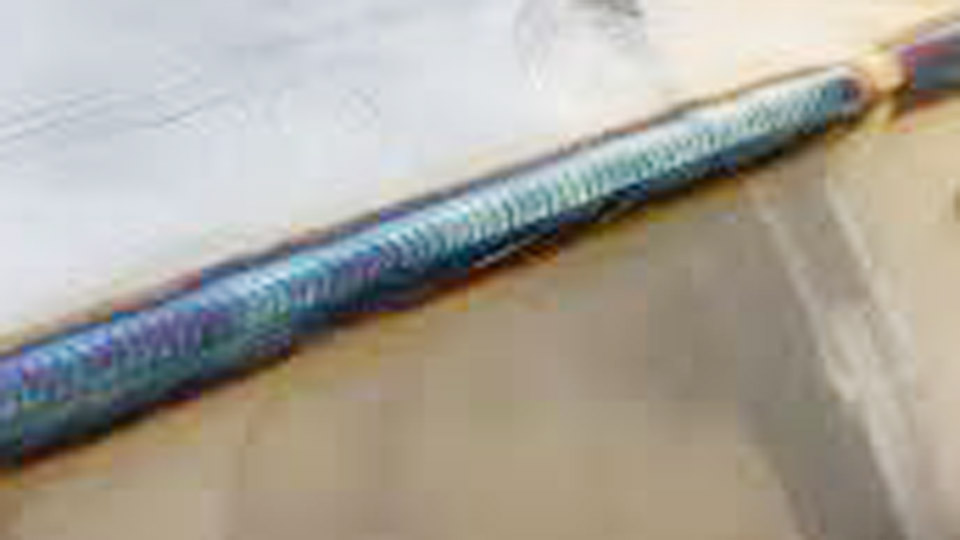
Why Stainless Steel Behaves Differently in MIG Welding
Stainless steel isn’t like your everyday carbon steel—it’s alloyed with chromium and nickel, which gives it that corrosion resistance but also makes it finicky under the arc. In MIG welding, where you’re feeding a continuous wire electrode through a gun with shielding gas, stainless tends to retain heat longer.
This can cause the material to expand and contract unevenly, leading to distortion that ruins precise fits in fabrication work.
How does this play out? The process relies on an electric arc melting the wire and base metal, protected by gas to prevent oxidation. For stainless, that gas shield is crucial because chromium can form ugly black oxides if exposed to air.
I’ve welded exhaust systems where poor gas coverage turned a smooth bead into a pitted mess, forcing me to grind it all out and start over.
When to use MIG on stainless? It’s ideal for thicker sections or production runs where speed matters, like building railings or repairing machinery. Stick welding might be tougher on thin gauge, but MIG offers better control if you nail the settings.
In the shop, I always start by assessing the grade—304 for general use, 316 for marine environments. Why? Because mismatched filler can lead to galvanic corrosion down the line. A tip: Preheat thicker stainless to 200-300°F to reduce cracking risks, but skip it on thin stuff to avoid warping.
Common mistake? Ignoring the heat-affected zone (HAZ), where the metal’s properties change, weakening it if overheated. Fix it by pulsing the trigger or using shorter welds to let it cool.
Picking the Best Filler Wire for Stainless MIG Welding
The wire you choose is the backbone of your weld—get it wrong, and you’re fighting uphill. For MIG welding stainless steel, go with solid wires like ER308L or ER316L, which match common austenitic grades. These low-carbon versions minimize carbide precipitation, keeping your weld tough against cracking.
How it works: The wire melts into the puddle, alloying with the base metal for a seamless joint. Diameter matters—0.030-inch for thin sheets under 1/8-inch, stepping up to 0.035 or 0.045 for heavier plate. I’ve used 0.035 on 1/4-inch 304 for truck frames, feeding it at 300-400 inches per minute (IPM) for smooth deposition.
When and why? Use ER308L for indoor fab like kitchen counters—it’s cost-effective and welds clean. Switch to ER316L for outdoor or chemical exposure, as the molybdenum boosts pitting resistance.
Shop tip: Store wires in a dry cabinet; moisture pickup leads to porosity that looks like Swiss cheese in your bead. Beginners often grab the wrong alloy, causing brittle welds. Pros? We check certifications to ensure compatibility. If you spot cracks post-weld, it’s likely a mismatch—grind out and reweld with the right stuff.
Let’s compare wires in a quick table for clarity:
| Wire Type | Best For | Diameter Options | Pros | Cons |
|---|---|---|---|---|
| ER308L | General 300-series stainless | 0.030-0.045 inch | Affordable, good ductility | Less corrosion resistance in harsh environments |
| ER316L | Marine or food-grade | 0.030-0.045 inch | Excellent pitting resistance | Higher cost, can be overkill for mild use |
| ER309L | Dissimilar metals (stainless to carbon) | 0.035-0.045 inch | Versatile for repairs | Prone to hot cracking if not preheated |
This setup has saved me time on mixed-metal jobs, like attaching stainless flanges to mild steel pipes.
Dialing In Amperage Settings for Perfect Penetration
Amperage is your power dial—too much, and you burn holes; too little, and the weld sits on top like butter on cold toast. For MIG welding stainless steel settings, aim for 100-150 amps on 1/8-inch material, bumping to 200-250 for 1/4-inch. It’s all about balancing heat input with travel speed.
How it ties in: Amperage controls the arc’s intensity, melting the wire faster at higher levels. Voltage pairs with it—18-22 volts for short-circuit transfer on thin stuff, 24-28 for spray on thicker. I’ve dialed 120 amps at 20 volts for 16-gauge exhaust, getting full penetration without warp.
When to adjust? For fillet welds on tanks, lower amps prevent undercut; for butt joints in structural fab, crank it for root pass strength. Why? High amps ensure fusion but risk distortion—I’ve straightened warped panels with clamps and heat sinks.
Tip: Use a digital machine like the Lincoln Power MIG for precise control; analog ones drift.
Mistake: Forgetting material thickness—newbies blast 200 amps on sheet metal, creating craters. Fix by practicing on scraps, watching for a steady hiss instead of pops.
In repair work, like patching a stainless hopper, start low and creep up. Pros monitor bead profile—a convex shape means good tie-in, flat or concave signals weak fusion.
Optimizing Voltage and Wire Feed Speed
Voltage shapes your arc—low for a tight, digging action; high for a wider, flatter bead. In MIG stainless setups, 19-23 volts works for most, but tweak based on gas and position. Wire speed? 250-350 IPM for 0.035 wire at 150 amps, ensuring the puddle doesn’t starve or flood.
Mechanics: Higher voltage lengthens the arc, improving wetting on stainless’s slick surface. Feed too slow, and you get stubbing; too fast, spatter everywhere. On a brewery tank job, I set 22 volts and 300 IPM for vertical welds, avoiding drips.
Use when? Overhead positions need lower voltage to fight gravity; flat calls for higher to speed things up. Why bother? Proper sync reduces defects like lack of fusion, saving grind time.
Anecdote: A trainee flooded the gun with wire at high speed, clogging it mid-weld—lesson: Calibrate with test runs. Tip: Listen to the arc—a bacon sizzle means spray mode, ideal for stainless efficiency.
Common pro slip: Ignoring contact tip wear, which spikes voltage unpredictably. Replace every few hours on long jobs.
Choosing the Right Shielding Gas Mix
Gas isn’t just protection—it’s a game-changer for bead quality. For MIG welding stainless, skip straight CO2; use 90% argon/10% CO2 or tri-mix (argon/helium/CO2) for better arc stability.
How: Argon inertness prevents oxidation, while CO2 adds penetration. Helium boosts heat for thicker stuff. I’ve switched to tri-mix on 3/8-inch plate, getting hotter arcs without cranking amps.
When: Basic mix for shop work; tri-mix for production or aluminum-stainless hybrids. Why? Pure argon beads look pretty but lack bite; CO2-heavy mixes cause carbon pickup, embrittling stainless.
Tip: Flow 20-30 CFH—too low, porosity; too high, turbulence.
Mistake: Using mild steel gas on stainless, leading to sugaring (carbide lumps). Fix with back-purging on pipes.
In food industry jobs, I insist on high-purity gas to avoid contamination—your welds touch what people eat.
Preparing Joints for Stronger Stainless Welds
Joint prep is half the battle—skip it, and no setting saves you. For stainless, bevel edges on thicker material to ensure full penetration, cleaning oxides with a stainless brush.
Process: Degrease with acetone, then grind or file for a 60-70° V-groove on butts over 1/8-inch. Why? Contaminants cause inclusions; poor fit-up leads to gaps that trap slag.
When: Always on repairs or precision fab; skip on thin lap joints. Shop story: On a railing install, dirty joints caused worm tracks—had to cut out and reprep.
Tip: Use backing bars on open roots to support the puddle. Beginners over-grind, thinning metal; pros measure for consistency.
For T-joints in frames, tack with low amps to hold alignment, preventing pull.
Step-by-Step Guide to Setting Up Your MIG Welder for Stainless
Let’s walk through a real setup, like welding 1/4-inch 304 plates for a workbench.
- Clean materials: Wipe with solvent, brush oxides.
- Select wire: ER308L, 0.035 diameter.
- Set gas: 98% argon/2% CO2 at 25 CFH.
- Dial machine: 180-220 amps, 24-26 volts, 350 IPM feed.
- Test weld: On scrap, adjust for smooth bead—no spatter, good tie-in.
- Weld: Short bursts, 20-30° gun angle, 3/8-1/2 inch stickout.
- Inspect: Look for uniform ripple, no undercut.
This sequence has nailed countless jobs, from auto parts to sculptures.
Common Mistakes and How to Fix Them in Stainless MIG
Even vets mess up—high heat warps thin gauge, fixed by water-cooled clamps. Porosity from drafts? Shield with screens.
Undercut: Lower voltage, slower travel. Cracks: Preheat, use low-hydrogen wire. I’ve reworked warped doors by stress-relieving at 400°F post-weld.
Tip: Log settings for each job—saves guessing next time.
Safety Gear and Practices You Can’t Skip
Stainless fumes contain hexavalent chromium—nasty stuff. Always wear a respirator, gloves, and full leathers.
Ventilate with fans, use fume extractors. Eye protection against UV. I’ve seen burns from ignoring gloves—don’t.
In tight spaces, monitor air quality; take breaks.
Comparing MIG to Other Processes for Stainless
MIG shines for speed, but TIG offers precision on thin stuff. Stick? Portable but messier.
Table time:
| Process | Speed | Cleanliness | Best Thickness | Cost |
|---|---|---|---|---|
| MIG | High | Good | 1/16+ inch | Medium |
| TIG | Low | Excellent | Under 1/8 | High |
| Stick | Medium | Fair | 1/8+ | Low |
MIG wins for shop efficiency.
Advanced Tips for Production Welding Stainless
For high-volume, use pulsed MIG—alternates current for less heat. On robots, program 150-200 amps.
Weave on wide joints for fill; stringer for strength. Backstep to minimize distortion.
In my fab shop, we pulse on aerospace parts for crack-free results.
Material Handling to Prevent Contamination
Stainless hates carbon—use dedicated tools, store away from rust. Cover with plastic.
Post-weld, passivate with acid to restore chrome layer.
I’ve lost jobs to rust stains from shared grinders—separate everything.
Wrapping Up
From brewery tanks that hold thousands of gallons without leaking to custom motorcycle exhausts that roar without rusting—getting those MIG settings dialed in has been the key to reliability. You’ve now got the complete guide to assess your material, pick the right wire, and fine-tune your machine for welds that last.
No more guessing or scrapping parts; you’ll approach each job with confidence, knowing how to balance heat, speed, and protection. Always cool your welds slowly under a blanket to avoid thermal shock—it’s saved me from countless hidden cracks.
Feel free to Watch our video about Stainless Steel MIG Welding Tips.
FAQs
Can I MIG weld stainless steel without gas?
No, but you can use flux-cored wire for gasless, though it’s dirtier and less ideal for corrosion-prone stainless. Stick to gas-shielded for clean results in most shop scenarios.
What amperage should I use for 1/8-inch stainless steel?
Start at 100-140 amps with 20-22 volts for short-circuit mode. Test on scrap—aim for full penetration without burn-through, adjusting based on your machine’s response.
Why do my stainless MIG welds turn black?
Likely poor gas coverage or contamination. Check flow rates, clean your nozzle, and ensure no drafts. Back-purging helps on enclosed joints.
Is ER308L wire good for all stainless?
It’s great for 304 and similar, but switch to ER316L for 316-grade with better molybdenum content against pitting in salty or acidic environments.
How do I reduce distortion in thin stainless sheets?
Use lower amps, faster travel, and tack extensively. Clamp to heat sinks or backers, and weld in short segments, allowing cooling between passes.
Read More MIG Welding Related Posts:
- How to Set Up a Lincoln 140 MIG Welder for Smooth Arc
- MIG Welding Square Tubing: Expert Tips for Stronger Joints
- Mig Welding Wire Speed And Voltage Chart: Ultimate Guide
- Lincoln Mig Welder Settings Chart: Ultimate Guide for Perfect Welds
- Mig Welder Wire Feed Motor Not Working: Quick Fix Guide
- How To MIG Weld Exhaust Pipe | Practical Guide
- How to Calculate Wire Feed Speed in MIG Welding: Expert Guide
- Aluminum MIG Welding Wire Speed and Voltage Chart
- MIG Welding Exhaust Pipe Settings | Practical Guide
- Pulse MIG Welding Settings | Practical Shop Guide
- MIG Welding 304 Stainless Steel | Practical Shop Guide


